TDI Episode 54: Chipotle, Sushi and Pot
April 27, 2008
Guests: Greg Ip, WSJ and Jon Markman of MSN Money look for answers to many of the questions investors are asking: What will the Fed do? Will food costs continue to rise? Recession? Markets? Best strategies for profits in difficult market conditions. $85 for sushi for 3? – Greg provides Andrew with a savvy solution…
LISTEN TO PODCAST | LISTEN @ ZUNE – @ iTUNES | DOWNLOAD

Gregory Ip is a senior special writer for The Wall Street Journal, based in Washington. He covers the Federal Reserve, the economy, financial markets and economic policy.Prior to assuming his current assignment in January 2001, Mr. Ip had covered the financial markets for the Journal’s Money & Investing section in New York since November 1996 when he joined the paper as a reporter in the New York bureau. He was named a senior special writer in October 2000.

Mr. Ip began his journalism career as a reporter for the Vancouver (B.C.) Sun from May to December 1989. He joined the Financial Post in Toronto, Ontario, in January 1990 and was an economics and financial reporter in Canada and later transferred to Washington, D.C., as a correspondent for the paper. In September 1995, he became a business and economics reporter for the Globe and Mail in Toronto.
READ REAL TIME ECONOMICS
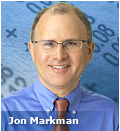
Jon Markman, a veteran money manager and award-winning journalist, is editor and founder of the investment research newsletters Trader’s Advantage and Strategic Advantage. A pioneer in the development of stock-rating systems and screening software, Markman is a co-inventor on two Microsoft patents and author of the best-selling books “Swing Trading” and “Online Investing.
SUBSCRIBE TO STRATEGIC ADVANTAGE
Markman was a portfolio manager and senior investment strategist at a multi-strategy hedge fund from 2002 to 2005; managing editor and columnist at CNBC from 1997 to 2002; and an editor, investments columnist and investigative reporter at the Los Angeles Times from 1984 to 1997. Markman is also currently a weekly columnist for MSN Money and a contributor to TheStreet.com.
Markman won a Gerald Loeb Award for Distinguished Financial Journalism for his columns explaining market chicanery in 2002; Society of Professional Journalists awards for his 2001 reporting on Enron and the post-September 11-investment environment; and was a news editor on Los Angeles Times staffs that won Pulitzer Prizes for spot-news reporting in 1992 and 1994.
A graduate of Duke University and the Columbia University Graduate School of Journalism, Markman speaks frequently on investment topics at conferences nationwide as well, as on TV and radio.
On the ZachZone : Intrepid Potash, Inc. (IPI); American Water Works Co., Inc. (AWK); Interactive Brokers Group, Inc. (IBKR); Chipotle Mexican Grill, Inc. (CMG)
Other Stocks mentioned in the Episode: Apple (AAPL) Microsoft Corporation (MSFT) Bank of America (BAC) Countrywide Financial Corp (CFC) Capital One Financial (COF) Potash Corp. of Saskatchewan Inc. (POT) Mosaic Co (MOS) Archer Daniels Midland Company (ADM)

Podcast: Play in new window | Download
Related Posts:
- TDI Podcast 126: Gold Bears and Bullish Neon Sightings Guests: Jon Markman, MSN Money and Vitaliy Katsenelson, Investment Management Associates. We...
- TDI Podcast 113: Curzio’s Real Story Guest: Frank Curzio tells us what happened with his recent departure...
- TDI Podcast 132: General Electric (GE) – Going to $0.01? Guest: Marc Lowell of the Restructured Settlement Company brings us info on...
Comments
2 Responses to “TDI Episode 54: Chipotle, Sushi and Pot”
Got something to say?
Subscribe


CMG is a gonna go down hill once people get ther fill on this type of mexican food:) I know here in Colorado this fad is fading. There is other Mexican places to eat that are more appealing. IPI is the company I think investors are trying to get a handle on? Maybe you guys can give us some of your insight about this stock , since there is not a whole lot of information available yet. As far as your other picks AWK and IBKR don’t know a lick about this companies.. I just know that small cap high growth stocks are in short supply, atleast the quality ones:)
Andrew & Friends,
Listened to the podcast Monday (it’s one of my favorites, I bought the book too and I just finished the chapter on Mutual Funds and at this point I anticipate writing a favorable review on amazon.com which is where I bought the book.)
Something on the podcast irked me a bit and I have to get it off my chest. One of the guests (can’t remember which one) mentioned that the Fed is a servant of the public. I’m not sure why the guest said that. The Fed is a privately-owned for-profit corporation that has been granted a monopoly by our government to control the money supply of our country. When I was in college, I learned that the first responsibility of a for-profit entity was to increase the wealth of the owners. The fed is not a government program/institution – it’s a private corporation. It’s not a servant to the citizens of the U.S., it’s a servant to it’s private owners, who have the power to manipulate the money supply to their own financial gain.
In the publication “The Federal Reserve System: Purposes and Functions” (published by the Federal Reserve Board of Governors) it is stated in Chapter 2, “The Federal Reserve sets the nation’s monetary policy to promote the objectives of maximum employment, stable prices, and moderate long-term interest rates.” Stable prices? Do they ride bikes to work? Do they buy their own gas, milk, rice, flour, etc? It seems that they either shop somewhere we don’t know about, or they aren’t achieving their goals. Was the great depression, the 1987 “correction” or our current economic status the shining star for stable prices and maximum employment?
One thing I do know, is that the Rockefeller/Aldrich family is one of the owners of the Fed, and that when the Great Depression was in full swing, Rockefeller was hailed as a hero for purchasing land in Manhattan and employing men to build Rockefeller Center. I have a different view. If I had the ability to control monetary supply (and in effect, the economy of a country) would I want to buy the land and hire people to do a death defying construction job during the Roaring ’20’s? Nope, if I got to manipulate it to my benefit, I’d create a huge crash and do it when the price for the land was low, and workers would risk their lives for their jobs just to get anything for a wage. I’m not going to say that’s what Rockefeller did, but he had the power to do that, and it is within the realm of possibility that it is what happened (however unlikely, it is possible.)
And when the President of the U.S. picks the chairman of the Fed, he picks it from a list that the Fed provides for him.
J.P. Morgan (another one of the private owners of the fed that controls monetary supply and the economy?) buys Bear Stearns for $10 a share (which was over $150/share less than a year ago.) Didn’t they just buy Bank One about a year or two ago? No, the big banks aren’t making sweet deals in a rough economy. They’re a servant of the people remember?
Sorry, I can’t believe what the guest said. The Fed is not a servant of the people. The Fed is a servant to the private owners of the Fed.