

DH Unplugged #32 – Apple vs. Microsoft Stores

August 25, 2009 5:15 pm

Here is our latest conversation …. new insights for anyone who invests in anything. This week the highlight is a discussion about the Apple (AAPL) stores and their success as well as the potential for someone to buyout Netflix (NFLX). Is Microsoft (MSFT) on the prowl for some good video service to compliment the new Xbox release? Interesting!
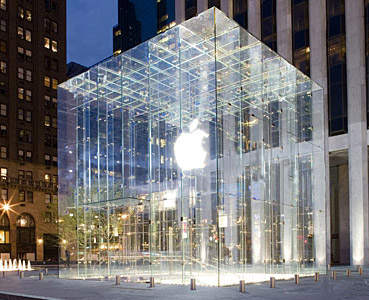

apple-store-nyc

Play

Sorry, No Related Posts.

5 Responses to “DH Unplugged #32 – Apple vs. Microsoft Stores”

  1. Lowell on August 26th, 2009 2:44 pm

    In the cash for clunkers discussion Roosevelt's dumping of milk was mentioned which just sounds stupid and I agree with the derision of the cash for clunkers program this expresses. The real stupidity is best thought of as the broken window fallacy (see Henry Hazlitt's discussion in Economics In One Lesson – Chapter 2 – available to read at http://fee.org/library/books/economics-in-one-les… ). The players have different names but the the result is the same – the broken car (window) may generate some positive economic result for the dealers, auto companies, and auto employees; but the car buyer is out the extra money he spends over the rebate for a new car he doesn't absolutely need and the US taxpayer is out $4,500.

    None of this secondary effect money can now be spent by the now poorer car owner and even poorer US taxpayer on something that would actually be productive for the economy. In addition, maintaining excess capacity in the auto industry, whether done altruistically as a jobs program or cynically as a payoff of the political system, will always be a bad idea.

    Cash for clunkers has about the same result as throwing a brick through some one else's window. It does not produce a good economic result.

  2. jt adfasdfasdfas on August 26th, 2009 7:29 pm

    Andrew –

    In regards to your supposition about Netflix becoming a possible acquisition target I have only one point to counter Dvorak, but it is notable. If Dvorak remembers, over 10yrs ago MSFT acquired Softimage (a 3D application developer). I was in the 3D industry at the time so I remember it this way. MSFT was in competition with 'big-iron' computer manufacturers running non-Windows operating systems. One of the goals of MSFT was to rationalize a case that commodity boxes (Windows) could compete with the big guys like Sun, SGI and HP. MSFT bought Softimage and revamped their middleware in order to make a case that their product was just as advanced (and cheaper) to the competition. They later sold Softimage but only after their case was made and SGI. HP and their proprietary OSs were no longer a threat.

    I could see MSFT buying Netfilx in order to add that capability to their home theater initiative. In many ways, it doesn't seem to matter if they lose a bit of money by offering Netfilx services with the aim of weakening a competitor, in this case Apple.

    Some background on the Softimage acquisition and MSFT battle to weaken Alias.

    It is hard to imagine that just a decade ago, One of the prime markets for SGI was high end 3D visualization, with applications like Alias Power Animator and Softimage. Alias (a SGI subsidiary during much of this period) was the technology leader in developing a 3D middleware called OpenGL; software routines and drivers added to video cards to facilitate display of computer generated images. SGI, like all big iron vendors was under threat from MSFT and their desire to bring their professional OS WindowsNT to the corporate and industrial market. One of the cases that big vendors made was that their apps couldn't be run on commodity boxes and their hardware was best suited for corporate environments.

    As I remember it, MSFT did the old 'embrace and extend'. They purchased Softmage in 1994 with the intent of showing that their application could run on Windows boxes. With Alias they attacked the middleware argument by doing a co-technology development deal to make something called 'fahrenheit'. SGI tried to follow thru with their end while MSFT stalled their side of the deal while simultaneously making a revision to their proprietary competing product, DirectX 7.

    http://en.wikipedia.org/wiki/Fahrenheit_graphics_…
    http://www.directx.com/graphics/fahrenheit.htm

    This left Alias/SGI financially weakened while MSFT had time to roll out a modern competitor Softimage on Windows and a competitive, if not superior middleware competitor to OpenGL called DirectX 7. This gave the game away to Windows and commodity hardware. So MSFT basically won by making a case that you could run advanced 3D on WindowsNT and that you didn't need a big SGI box in order to do it..

    I could see a case where MSFT is thinking along the same lines with Apple

  3. Chris on August 27th, 2009 4:16 am

    Andrew, I heard you were doing some options on the VIX. How do you feel about the VXX ETN that is supposed to track the VIX?

  4. Andrew Horowitz on August 27th, 2009 11:12 am

    Need more time to prove itself

  5. Victor F. Cole on January 14th, 2011 10:43 am

    Microsoft stores have more advantages. The biggest reason, why Apple has so many sales is because they had a good marketing campaign and have maid a cult of their product.

Got something to say?