

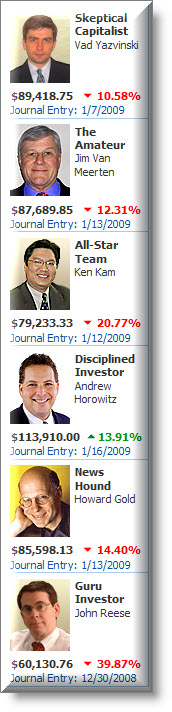
 (From my latest journal entry for the MSN Strategy Lab. Take a look on the left at the current standings)
In this volatile market, contracts on options have become increasingly more expensive. This is because the main pricing components of options are: expected rate of return, volatility of the underlying security and time until expiration.
As we saw the key volatility indexes soar in 2008, we saw premiums on options — which give you the right to buy a stock at a certain price — increase. Volatility in the market presumes there is higher probability that an option will be exercised before the option itself expires.
Generally speaking, most funds are sellers of premium, which basically means they are selling a call or put to make money from an option. During an options expiration day, if the underlying security is approaching a level where there is quite a bit of open interest for a large fund, then that fund may protect its options by keeping it below the strike price.
In short, funds would rather have the option expire with no value so they can keep their full premium amount, and they are willing to protect that by selling or buying into the underlying security to keep it from moving above the strike price.
On many recent expiration days, we have noticed a general run-up in the price of securities, either during the day or several days after. This may have occurred because funds were selling calls and collecting the income, and — in order to protect their options — they sold massive amounts of the underlying security before their options expired. Once the options expired and they collected their full premium, funds released all of their shorts, causing the markets to rally higher.
On options based on the S&P 500 Index ($INX), we are seeing quite a bit of open interest at the 850 level and then more open interest at the 900 level. During expiration tomorrow, we should see funds protecting these levels to make sure options do not get exercised. If funds happen to keep the S&P below 850, then the following days we could see an increase in the S&P 500, as those shares that were sold short will now be released into the market.
HELLLO
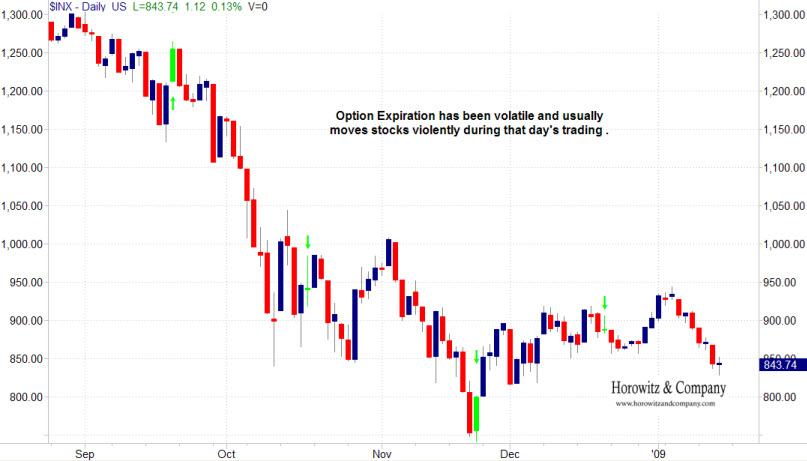
The chart is of the S&P 500, and the green bars signal an expiration day. Pay attention to the day ahead of us, and let’s see how things play out.
(Click below to enlarge the chart. It shows an interesting pattern during options expiration week.)
If you would like a copy our first-quarter economic commentary and outlook, click here.
99999999999
");
} else {
document.write("" );
}