
TDI Podcast 85: PinPoint Charting the Next Market Move
November 30, 2008
Guest: Brian Shannon, AlphaTrends.net provides insight and direction of this ever confusing market. We

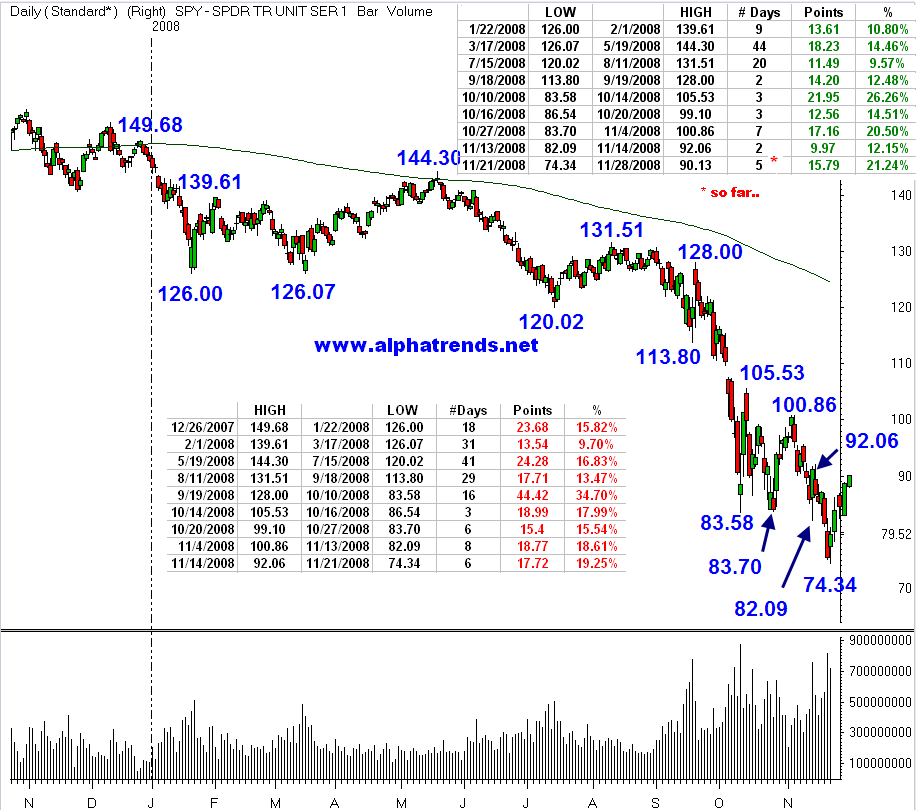
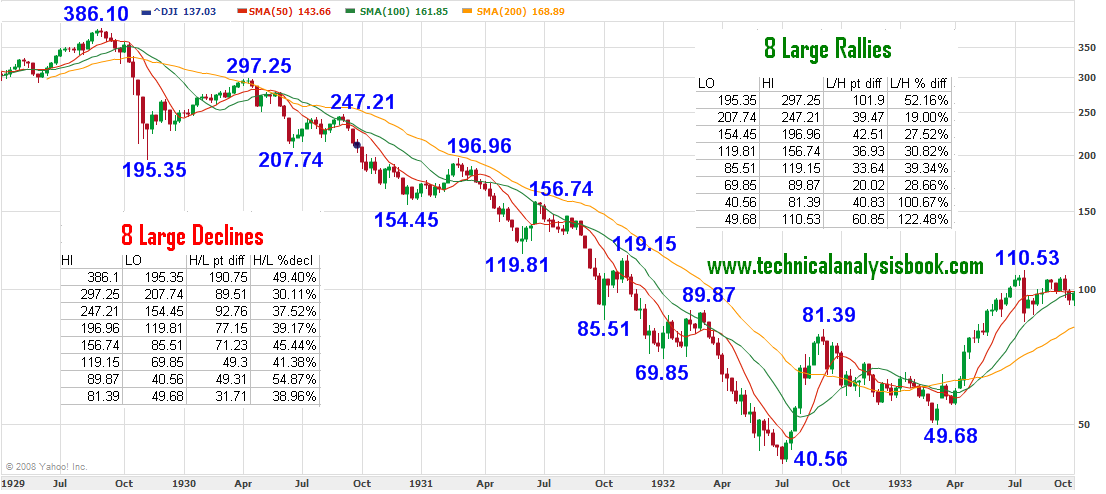
review buy an sell rules along with some key tips on how to profit and limit losses. How is this market different from the 1929-1932 bloodbath? Will it continue to decline? Are we in rally mode or simply a bear market bounce? These are some of the questions answered in this episode.
LISTEN TO PODCAST NOW | LISTEN @ ZUNE – @ iTUNES
Brian Shannon founded AlphaTrends in an effort to provideĀ unbiased technical analysis of momentum stocks or stocks that look poised for a large move in either direction. Brian is a veteran full time trader and self taught technical analyst who was previously Head of Research and Training Instructor at MarketWise.
—
Click on the charts to enlarge
—
Stocks Discussed: (SPY) , (QQQQ), (DIG), (UYM), (AAPL) (DJIA) Archer Daniels (ADM), Caterpillar (CAT), Berkshire Hathaway (BRK.A), PowerShares DB Agriculture Fund (DBA), PowerShares DB Com Indx Trckng Fund (DBC), General Motors (GM), Ford (F), Citigroup (C), Goldman Sachs (GS), Sears (SHLD)
—
This episode is sponsored by GoToMeeting. Try it free for 30 days.
—

—
Take the VIRTUAL TOUR of the TDI Managed Growth Strategy HERE
—

Podcast: Play in new window | Download
Related Posts:
- TDI Podcast 109: Dennis Gartman is investing in…. Guest: Dennis Gartman provides us some reasons for the potential bull market...
- TDI Podcast 105: Schwager on Wizards and Keynesianism Guest: Jack Schwager, Author or Market Wizards discusses markets and bailouts with...
- TDI Podcast 122: Mish – How Long Can This Rally Last? Guest: Mike “Mish” Shedlock of Sitka Pacific discusses the bid on bonds...
Comments
3 Responses to “TDI Podcast 85: PinPoint Charting the Next Market Move”
Got something to say?
Subscribe


Regarding your musing on parallels between 1929-1931 and the current state of the market. Yes, there are certainly parallels. However, one major difference that was recently pointed out (and I cannot remember where I read it so I cannot give credit where credit is due) is that following the crash in 1929 the Hoover administration did nothing. I don’t begin to know enough of the history to know if there were informed calls for action, or if the whole situation was so bizarre that no one knew what to do.
The Federal Reserve did not take positive action, wading into the markets with at least a million dollars of security purchases (a big number then) until the winter/spring of 1932, 15-18 months into the crisis. Worse yet, they actually increased the discount rate in October 1931 from 1.5% to 2.5%. The New York Bank of the United States collapsed in early December. By year’s end over 2200 banks had collapsed. Remember the FDIC did not exist.
Backing up to the first half of 1930, Congress passed and Hoover signed, over the objections of 1000+ American economists, the Smoot-Hawley Tariff act which was tremendously protectionist. Other countries quickly retaliated, and from a high in 1929, U.S. exports crashed. It is thought that while Smoot-Hawley didn’t cause the Great Depression, it contributed to it significantly.
There were all kinds of other factors in play, of course, as credit markets imploded in Europe, as major countries such as Britain and Japan went off the gold standard and banks collapsed around the world.
To return to my first point, while the various bailouts of the current administration in Washington may be way less organized than they should be, and while there is still probably a lot of bad stuff to come in the market, I don’t think we can draw exact historic parallels. Many things about the current situation are different. That’s not to say that the history of the Great Depression doesn’t offer us lots of lessons, because I think it does. I particularly think the observation in this podcast that the markets rallied into early 1930 and then declined over the next 18 months to 20% of the October 1929 lows is very sobering. But the historian in me says that we need to be careful and precise about the lessons we learn and the morals we draw.
CORRECTION!
Sorry – way not enough zeros! The Fed injection into the securities markets in early 1932 was 1 billion dollars, in two $500 million dollar lumps.
To see the current market drop superimposed on the last few “large bears” including 1929, check out this site: http://dshort.com/
–joe